


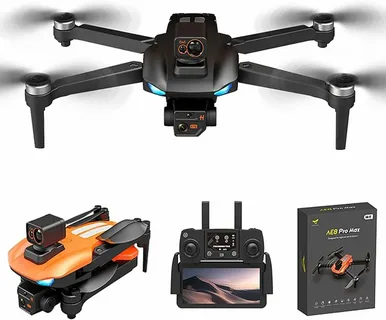
In the fast-evolving world of aerial technology, drones are no longer just flying cameras or delivery tools—they’re becoming intelligent agents capable of navigating complex environments on their own. One of the most transformative developments in this space is the obstacle avoidance drone, which uses real-time data, AI, and 3D vision to detect and dodge obstacles mid-flight. This means safer operations, smarter automation, and a wider range of industrial applications.
If you’re looking to enhance your drone capabilities, especially for precision-critical tasks, platforms like MRDVS 3D Obstacle Avoidance offer advanced sensor systems designed for real-time navigation, safety, and autonomy.
In this article, we’ll explore what obstacle avoidance drones are, how they work, the technologies behind them, and why they’re revolutionizing industries from logistics to emergency response.
What Is an Obstacle Avoidance Drone?
An obstacle avoidance drone is a UAV (unmanned aerial vehicle) equipped with intelligent systems that help it automatically detect and avoid physical objects in its path. These drones are built with sensors and processors that allow them to “see” their surroundings, process spatial data, and make real-time flight decisions without human input.
This advanced ability transforms drones from passive tools into autonomous, context-aware machines. Whether navigating between trees in agriculture, maneuvering around cranes at construction sites, or flying inside GPS-denied warehouses, these drones are capable of completing complex missions safely and efficiently.
How Obstacle Avoidance Works
Obstacle avoidance drones work by combining sensory input with onboard data processing and decision-making algorithms. Here’s how the system functions:
- Detection: Cameras, LiDAR, ultrasonic sensors, or ToF sensors detect objects around the drone.
- Analysis: The drone’s AI software builds a 3D map of the surroundings.
- Prediction: Motion forecasting allows the system to determine the direction, speed, and movement of obstacles.
- Action: The drone adjusts its flight path in real time to avoid collisions.
Unlike basic GPS-only drones that follow a straight-line flight plan, these advanced models can reroute on the fly, respond to environmental changes, and even navigate through tight, complex indoor spaces.
Industries Benefiting from Obstacle Avoidance Drones
Obstacle avoidance capabilities open the door to a wide range of industries and applications, including:
Agriculture and Forestry
Drones used in precision agriculture benefit greatly from obstacle detection. They can safely navigate orchards, scan crops at low altitudes, and avoid trees, wires, or equipment—all without manual control.
Construction and Infrastructure
Sites with heavy machinery and scaffolding can be dangerous environments. Drones equipped with obstacle avoidance can perform aerial inspections, site mapping, and structural analysis without risking collisions or interruptions.
Public Safety and Emergency Response
In disaster zones or search-and-rescue missions, drones need to enter unstable areas like collapsed buildings or wildfire zones. With obstacle avoidance, these drones can fly safely through tight passages and deliver life-saving data in real-time.
Indoor Warehousing and Logistics
GPS is often unreliable indoors, but drones with visual and depth-sensing navigation can autonomously move through warehouses, scan inventory, and transport small items without colliding with shelving or personnel.
Commercial Drone Delivery
As the demand for drone-based deliveries increases, obstacle detection becomes essential for navigating city environments. These drones can safely fly past buildings, poles, birds, and trees to reach their destinations.
Key Technologies Behind Obstacle Avoidance
Obstacle avoidance drones rely on a powerful combination of hardware and software. Here’s a breakdown of the core technologies:
| Technology | Function |
| LiDAR Sensors | Emits laser pulses to detect and measure distances to objects in 3D. |
| Stereo Vision Cameras | Uses dual lenses to estimate depth and spatial position. |
| ToF (Time-of-Flight) | Measures how long it takes light to bounce off objects to assess depth. |
| Ultrasonic Sensors | Useful in short-range detection and low-light environments. |
| AI & Machine Learning | Analyzes patterns, predicts movements, and enhances decision-making. |
| SLAM Algorithms | Simultaneous Localization and Mapping for creating real-time 3D maps. |
These technologies make it possible for drones to perceive their surroundings with accuracy, even in fast-changing or low-visibility scenarios.
Benefits of Obstacle Avoidance Drones
Using drones equipped with real-time object detection and avoidance systems leads to major benefits for any operation. Let’s explore why:
- Safer Flights
By actively avoiding collisions, these drones reduce crash risks significantly, which translates to longer hardware life and fewer maintenance costs. - Autonomy and Efficiency
Autonomous path planning reduces human workload and enables continuous operations, even in areas where traditional drones would fail. - GPS-Independent Navigation
Visual and sensor-based positioning allows drones to fly in tunnels, warehouses, and under bridges where GPS signals are blocked. - Versatility Across Environments
Whether flying in forests, construction zones, or city streets, obstacle avoidance ensures smooth, uninterrupted flight performance. - Lower Operational Costs
By minimizing damage, human intervention, and mission failure rates, these drones help companies save money over time.
Comparison Table: Basic Drones vs. Obstacle Avoidance Drones
| Feature | Basic Drone | Obstacle Avoidance Drone |
| Real-time Obstacle Detection | No | Yes |
| Indoor Navigation | Limited | Excellent |
| Autonomy Level | Semi-autonomous | Fully autonomous |
| Flight Safety | Moderate | High |
| Application Flexibility | Narrow | Broad (indoor & outdoor) |
What to Consider When Choosing an Obstacle Avoidance Drone
Before investing in a drone with obstacle detection, ask yourself the following:
- Environment: Will you fly in urban areas, forests, indoors, or near structures?
- Sensor Range: Do you need short-range navigation or long-range environmental awareness?
- Payload: Will the drone carry cameras, sensors, or cargo? Make sure the drone supports the weight.
- Flight Time: Obstacle avoidance features consume power. Balance capability with battery life.
- Software Compatibility: Ensure the drone integrates with your mapping or mission planning software.
Real-World Example: Inspection in Confined Spaces
A utility company needed to inspect the inside of a large underground pipeline. Traditional methods involved high labor costs and posed safety risks. By deploying an obstacle avoidance drone, the team was able to map and inspect the pipeline in real time without risking human lives. The drone avoided pipe walls, moisture, and debris, completing the mission in half the time and at a fraction of the cost.
Future Trends in Obstacle Avoidance Technology
Looking ahead, the evolution of drone technology will continue to improve safety and intelligence. Some emerging trends include:
- Edge AI Processing: Faster, on-device computing for real-time decisions without relying on cloud services.
- Swarm Technology: Multiple drones communicating with each other to avoid collisions while flying cooperatively.
- 5G Connectivity: Enables low-latency streaming and remote operation, enhancing precision.
- Self-Learning Systems: Drones that improve obstacle response through AI-based behavior adaptation.
These advancements will make drones even more capable, pushing the boundaries of what’s possible in automation, inspection, and delivery.
Conclusion
The rise of the obstacle avoidance drone marks a major leap forward in UAV autonomy, safety, and intelligence. These drones are no longer passive tools; they are responsive, adaptive systems capable of navigating unpredictable environments with precision and confidence. Whether you’re using drones for mapping, surveillance, delivery, or inspection, adding obstacle avoidance capabilities reduces risk, boosts efficiency, and opens new possibilities.
As industries continue to demand smarter, safer aerial solutions, obstacle avoidance will become a standard feature in commercial drone systems. If you’re ready to upgrade your drone capabilities, now is the perfect time to explore advanced solutions built for the challenges of modern environments.
