


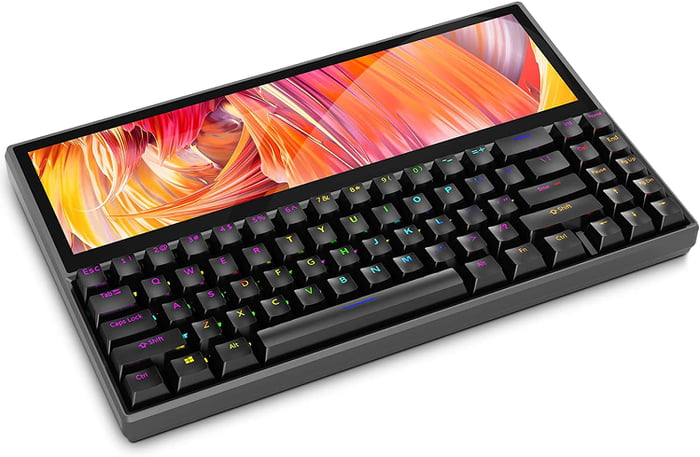
Keyboards have long been the primary interface between humans and computers. However, a specialized category known as keyboards with display has transformed the way users interact with technology. From the early experimental models to modern adaptive devices, these keyboards have evolved dramatically. Let’s explore their journey through time.
The Past: Early Innovations
The concept of a keyboard with display dates back to the late 1970s and 1980s when manufacturers experimented with integrating small screens into keyboards. Early models featured monochrome LCDs that displayed basic functions like shortcut commands or numeric data. These devices were mostly used in niche applications such as programming, financial trading, and industrial controls.
Although limited in functionality, these initial innovations laid the groundwork for more sophisticated designs. They demonstrated the potential of combining tactile input with visual feedback, providing users with a faster and more efficient workflow.
The Present: Modern Keyboards with Display
Today, keyboards with display are far more advanced. Modern iterations feature full-color OLED or LCD screens, dynamic key labeling, and even touch-sensitive keys. High-end gaming keyboards, for instance, allow users to customize key functions and view real-time game stats directly on the keyboard’s display. Similarly, professional content creators benefit from keyboards that show application-specific shortcuts, reducing reliance on mouse navigation.
Software integration has also enhanced the adaptability of these devices. Users can program macros, notifications, and even live feeds to appear on their keyboard screens, making them not only input devices but also mini-information hubs.
The Future: Innovations on the Horizon
Looking ahead, the future of keyboards with display is poised to merge more seamlessly with emerging technologies. Flexible and foldable displays could allow entire keyboards to transform based on user needs, while AI-driven interfaces might predict the user’s next command and adjust keys dynamically. Virtual reality (VR) and augmented reality (AR) could further integrate display keyboards into immersive digital workspaces, removing the need for traditional monitors altogether.
As technology continues to evolve, keyboards with display may become central to the way we interact with computers, bridging the gap between hardware and intelligent software interfaces.
Conclusion
From their early monochrome prototypes to today’s fully interactive devices, the journey of keyboards with display exemplifies technological progress and user-centric design. As the line between input and output continues to blur, these keyboards are likely to play an increasingly significant role in the future of computing.
