


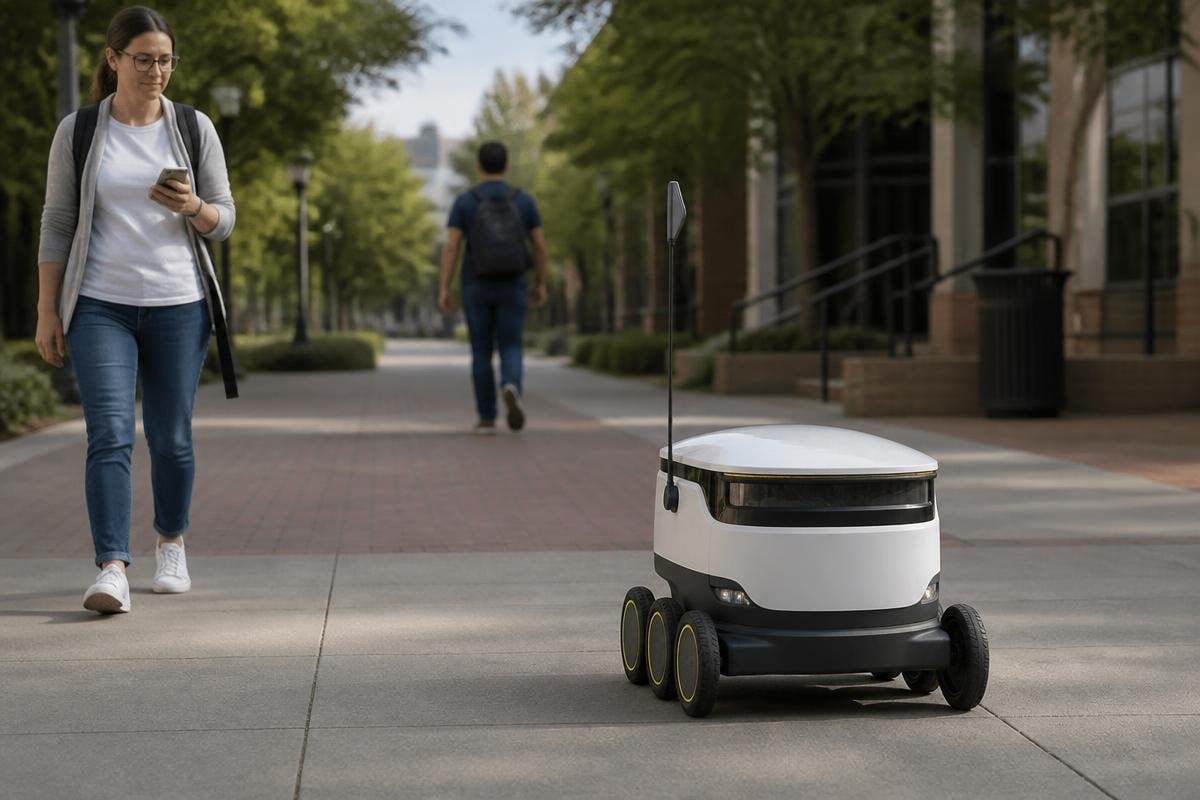
A robot may soon have to choose between two actions when its sensors show danger, delay, or conflicting orders. The hard part isn’t giving it a rule; it’s deciding who wrote that rule and who carries the blame when it fails.
- Robots can rank preset rules, yet they don’t own the values behind them
- Safety choices need clear limits, human review, and records of each action
- The highest-risk decisions should stay with a named person
What a robot can actually decide
Using sensor data, the system can compare conditions with rules set by its maker or operator. For example, a delivery robot might slow down near a person, stop when its camera detects an obstacle, or choose a longer route around a blocked path. Those are decisions in the technical sense.
Moral choice asks a wider question: what should happen when every available action carries a cost? A care robot may need to choose between protecting a person’s privacy and sending an alert after detecting a fall. A road robot may need to choose between stopping hard and risking injury to someone inside the vehicle.
The robot can rank those options. It can’t explain why one person’s safety should count more than another person’s privacy unless people have already set that value in its rules, training data, or control software.
That difference matters because a system can act without having a moral view. It follows a method built by people, then applies that method at machine speed.
Rules need a clear owner
Each robot decision starts with a chain of human choices. Engineers select the sensors and limits. A company sets the task. A customer chooses where the system runs. Regulators set legal boundaries.
Each choice can shape the result before the robot moves. The chain becomes harder to inspect when a machine-learning model helps rank actions. The model may weigh many signals at once, while its operator sees only the final command. That makes logs important. A useful record should show the sensor inputs, the rule or model output, the action taken, and the person who approved the system’s operating limits.
Real cases put those records to work. Reports on autonomous robotics can connect a machine’s action to its operator, system limits, and recorded outcome before a company names who owns the decision.
A company also needs a named owner for each high-risk choice. “The algorithm decided” describes the process, not responsibility. A robot has no legal duty, personal stake, or ability to repair harm after an error.
Where human control still matters
Human review should remain in decisions that can cause serious injury, remove a person’s access to care, or change someone’s legal status. In those cases, the system may collect information or suggest an action, while a trained person checks the case and records the reason for approval.
That approach has a cost. A human review step can slow a system and add staff time. The cost is easier to judge when the alternative is clear: a machine making an irreversible choice with no person ready to question it.
Some settings also make review hard. In a warehouse, the system can stop and wait for a supervisor. A search robot in a dangerous area may need to act before a person can respond. The answer in that case is a narrow set of pre-approved rules, tested failure states, and a hard stop when the situation falls outside those rules.
I’d keep moral authority with people and give robots bounded choices that can be checked later.
The limits of preset ethics
A short list of rules can handle familiar cases. It becomes less useful when conditions change, sensor data is incomplete, or two rules point in opposite directions. A rule such as “protect people” still leaves open who gets priority, how much risk is acceptable, and what evidence the robot needs before it acts.
Training data brings another limit. If past decisions reflect unfair treatment, a model can repeat that pattern while appearing consistent. Consistency doesn’t make the result fair. The system needs tests built around real cases, including cases where the correct response is to stop and ask for help.
The public also needs a way to challenge a decision. That means clear notices, access to relevant records, and a path to appeal. Without those steps, a robot may make a choice that looks neutral while leaving the affected person with no useful reply.
A practical decision guide
Before giving a robot authority over a moral choice, check these points:
- Name the owner: assign a person or organization that carries responsibility for the system’s limits
- Set the boundary: list the actions the robot may take and the cases that require human approval
- Record the reason: store the sensor data, model output, rule used, and final action
- Test failure cases: include missing data, conflicting rules, sensor errors, and requests outside the task
- Offer an appeal: give affected people a way to ask for review and correction
Robots should make fast safety responses when people have set the rules and the risk is understood. They should not become the final authority on choices that define a person’s rights, care, or safety. The next test is simple to state: when a robot makes a disputed choice, can a named human explain it, review it, and change the system before the same choice happens again?
